Pay in installments of $6.79 with
 ,
,
 and
and

Shipping Estimate
USA
- USA
- CAN
- USA
- CAN
Ships within 48 hours · Estimated delivery Jun 30 - Jul 5
 Promo Codes Available:
For Your Every Summer RSVP, with Code: SUMMER15
Description
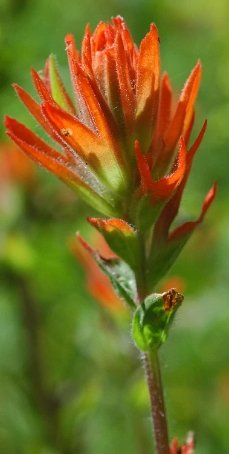
indian paintbrush flower seeds Red Paintbrush Seeds (Castilleja miniata) — Northwest MeadowscapesOne of the most interesting meadow species we sell, with a fascinating ecology. Also known as Indian paintbrush, this remarkable red or orange flowered plant is the most common member of its genus in the West, where it occurs from Alaska to California along the coast and inland to the Rocky Mountains. Despite its widespread distribution the handsome perennial is not very abundant except in relatively pristine natural areas where its remarkable root
One of the most interesting meadow species we sell, with a fascinating ecology.
Also known as Indian paintbrush, this remarkable red or orange-flowered plant is the most common member of its genus in the West, where it occurs from Alaska to California along the coast and inland to the Rocky Mountains. Despite its widespread distribution the handsome perennial is not very abundant except in relatively pristine natural areas where its’ remarkable root system can remain undisturbed.
In natural settings giant paintbrush occurs in damps soils and full to partial sun, such as moist meadows, forest clearings, spring seeps, and streambanks. While it isn’t actually “giant” as the name would suggest, it does grow to a little over two feet in height, with modest true flowers hidden within the bright scarlet leaf bracts. Based on appearances alone, it’s likely a hummingbird visited plant although we don’t actually see a huge amount of pollinator activity on it. And, while deer will take a bite out of red paintbrush it doesn’t appear to be a favorite.
What makes the plant most remarkable is its parasitic dependence on other plants. Like other members of its genus, the root system of this plant plugs itself into the roots of various hosts, extracting nutrients that supplement its growth and energy needs. It’s likely that nobody knows the full range of other species giant red paintbrush parasitizes, but a range of host plants have been described, including various sedges and grasses such as Roemer’s fescue, yarrow, Oregon sunshine, thimbleberry, and even some non-native weeds such as oxeye daisy, sheep sorrel, and possibly even Canada thistle.
With this complicated host dependency, giant red paintbrush can be a challenge to establish. Various propagation techniques that people have used with some success include:
- Direct sowing into meadows adjacent to a host plant,
- Sowing in plug trays with a host plant, then transplanting the two species together into the landscape,
- And even cutting back a host species to the ground then planting the seed into the stem or crown of the host plant in the fall,
- Fall-planting as a single species in plug trays, combined with fertilizer applications to support the plant growth without a host, until it can be transplanted into the field.
This is a great plant for experimentation, and a species that we still have a lot to learn about.
Approx. 300-500 seeds (0.1g).
Shipping Notes
- Free Standard Shipping on $100+ Orders to the USA.
- Except Preorder products are shipped in 48 hours.
- Delivery to the USA:
- Standard Shipping : 3-10 business days
- If time is of the essence, please consider selecting expedited delivery for faster service.
Exchange/Return Notes
- We offer a 30-day return/exchange service after receiving.
- Final sale items are not eligible for returns or exchanges.
- To process your return/exchange, please contact us at [email protected]
- Please click here for more details>>> Return & Exchange Policy